Charter a Bulk Carrier
Charter a bulk carrier, from mini-bulker to Capesize. Send your cargo, ports, and laycan, and we send back an offer checked against the market within one business day.
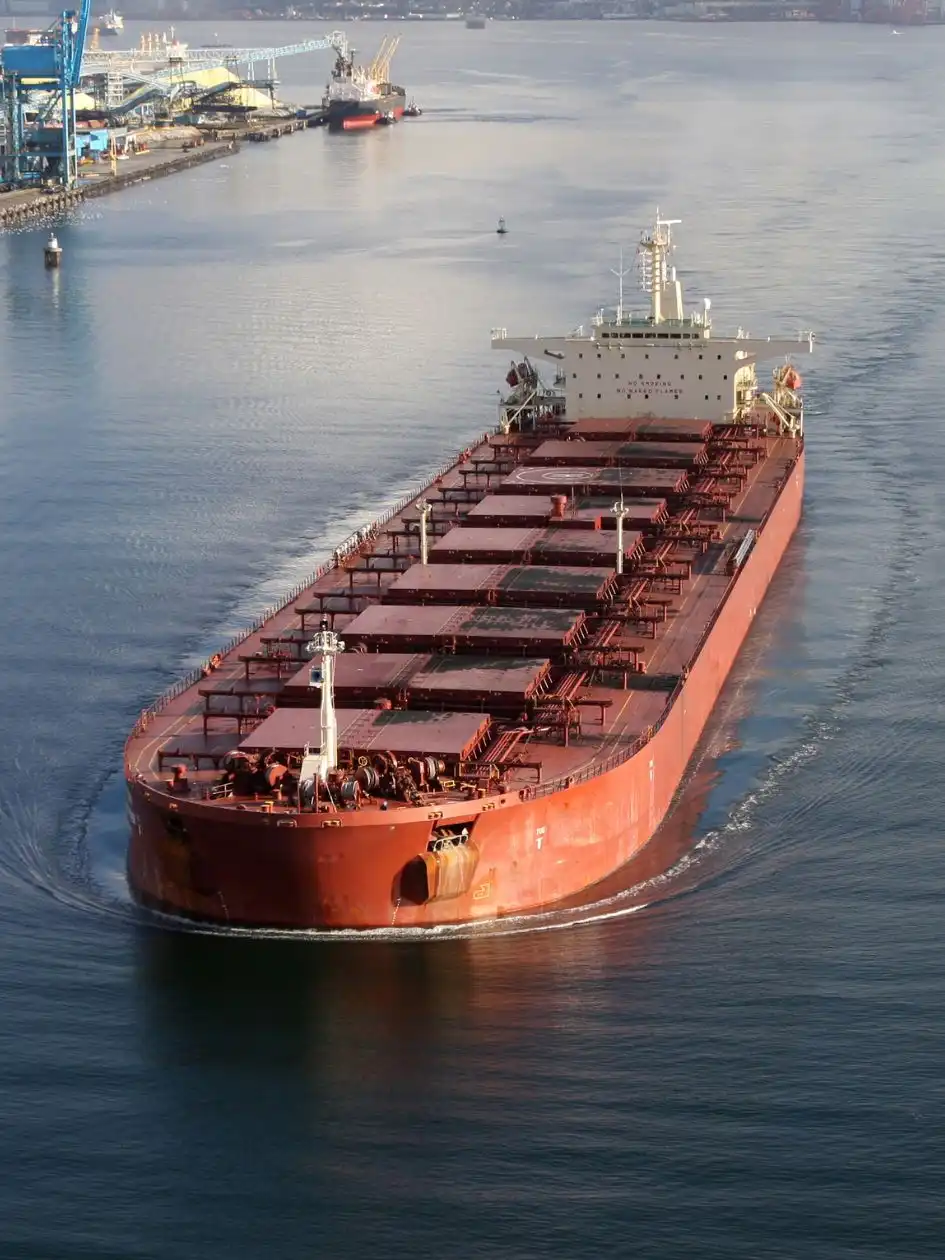
Charter a bulk carrier through Bulkargo and you get ship options, a freight estimate, and a charter party under way within days. We find the ship, negotiate the price, and stay with you from your first inquiry through settlement after the voyage.
What you get when you charter a bulk carrier with us
One inquiry gets you a shortlist of ships, a price checked against recent fixtures, and a charter party we have already reviewed clause by clause. The broker who fixes the ship stays with you through demurrage and settlement.
Ship options
Three to six suitable ships for your cargo and laycan, found through our network of owners and operators.
A freight estimate
A price checked against recent fixtures for similar cargo.
A charter party
Gencon or the standard form for your trade, reviewed clause by clause before you sign.
One broker to settlement
The broker who fixes the ship stays with you through demurrage and final settlement.
How to charter a bulk carrier
The steps are the same for a one-off spot voyage and a long-term contract of affreightment. A routine dry cargo voyage charter takes three to seven business days from inquiry to signed fixture. Project cargo, heavy lift, and specialist fixtures need four to eight weeks of lead time. Fewer ships can take them, and the engineering reviews take longer.
- 01
Tell us what you need
20 to 30 minTell us the cargo type and tonnage, the load and discharge ports, the laycan window, and any limits on the ship. We ask about anything missing, so the offers that come back are easy to compare.
- You provide
- Cargo, ports, laycan
- We handle
- Questions on stowage and ship fit
- 02
Market search
24 to 72 hrsWe ask our network of owners and operators for ships that fit your cargo, laycan, and limits.
- We handle
- Shortlist of three to six ships
- 03
Comparing offers and negotiating
24 to 48 hrsWe compare each offer with recent fixtures for similar cargo. Then we negotiate the freight, laytime, demurrage, and the other terms.
- We handle
- Price negotiation, full terms
- 04
Fixture and charter party
24 to 72 hrsWe exchange a recap, then draw up the formal charter party on Gencon or the standard form for your trade. We review every clause before you sign.
- We handle
- Charter party review, arranging signatures
- 05
Before loading
This step covers ship nomination, notice of readiness, appointing a port agent, and the hold cleanliness inspection and surveys.
- We handle
- We liaise with the master, the owner, and the port agents
- 06
Voyage and settlement
The ship loads, the bill of lading is issued, and the cargo is discharged. We review the statement of facts. After discharge we settle demurrage and support any dispute where needed.
- We handle
- Settlement, paperwork, dispute support
What it costs to charter a bulk carrier
You pay for a voyage charter by the tonne of cargo and for a time charter by the day. The price depends on the route, the cargo, the size of the ship, and the state of the market. The table shows typical prices in a normal market.
| Charter type | How you pay | Typical price |
|---|---|---|
| Voyage charter | Per tonne, in USD | A few USD a tonne on short runs. USD 25 or more a tonne for iron ore from Brazil to China |
| Time charter, Panamax/Kamsarmax | Per day, in USD | USD 12,000 to USD 30,000 a day |
| Time charter, Handysize/Supramax | Per day, in USD | Less than a Panamax |
| Time charter, Capesize | Per day, in USD | Can cost a lot more when the market is busy |
The price we negotiate is the price you pay.
What we need from you
Send what you have. The list below matches the fields on our quote form. Each item shapes the ship shortlist, the price, or both.
| What to send | Example | Why it matters |
|---|---|---|
| Cargo spec and quantity | About 32,000 MT of bulk urea | Tells us the stowage factor (how much space a tonne takes up), how clean the holds must be, and the ship size |
| Load port or region | A specific port, or a range of ports at an early stage | Sets the draft and air draft limits, the loading rate, and which berths are available |
| Discharge port or region | A specific port, or a range | The same checks at the other end, plus any limits the receiver sets on ship age or P&I cover |
| Laycan window | A window of 7 to 14 days is normal | A tighter window leaves fewer ships to choose from, and prices tend to rise |
| How you want to pay | Voyage by the tonne, time charter by the day, or "advise" | Tells us which charter type to look for before we search the market |
Flag any special requirements when you first get in touch: hold cleanliness, loading or discharge gear, draft limits, or a maximum ship age. We use them as hard filters on the shortlist. A budget is optional but useful. We do not negotiate to that number. It tells us quickly whether the market sits above, below, or in line with your figure. For a recurring programme, add your annual or seasonal volume forecast, the port pairs, and any existing contract of affreightment (COA) terms. A broker replies within one business day.
Bulk carrier sizes we charter
We can reach every size of dry bulk ship, from mini-bulker up to VLOC for iron ore programmes.
| Vessel Class | DWT Range | Minimum Cargo Size |
|---|---|---|
| Mini-bulker | ~3,000 to 10,000 DWT | From ~3,000 MT |
| Handysize | ~25,000 to 40,000 DWT | From ~25,000 MT |
| Handymax | ~45,000 to 55,000 DWT | N/A |
| Supramax/Ultramax | ~58,000 to 63,000 DWT | From ~50,000 MT |
| Panamax/Kamsarmax | ~75,000 to 82,000 DWT | 65,000 to 80,000 MT |
| Capesize | ~180,000 DWT | 150,000 to 180,000 MT+ |
| VLOC | 320,000+ DWT | Iron ore programmes through long-haul owner relationships |
A mini-bulker does not pay for itself on less than 3,000 MT. For a small parcel, the practical option is a part cargo on a multipurpose ship. For liquids, it is a slot on a parcel or chemical tanker. We look at more than DWT when we pick a ship. Its age and class, last cargo, current position, trading restrictions, and whether it has its own cranes (geared or gearless) all decide which ship we show you.
Which charter type fits your cargo
The charter type follows the pattern of your cargo. A single cargo points to a voyage charter. A rolling programme or an annual lifting commitment points to a time charter or a contract of affreightment.
| Charter Type | Fits |
|---|---|
| Voyage charter | A single cargo on a set laycan. The owner carries the ship risk. Most fixtures use this setup. |
| Time charter | A rolling shipping programme where you want freedom over routing and intake. |
| Contract of affreightment | An annual or seasonal lifting commitment where you want to lock in the tonne-mile cost over a set volume. |
| Consecutive voyages | A repeating route where the same ship runs the same loop, and the owner spreads the cost of the empty legs across the voyages. |
Choose a voyage charter to rent a cargo ship for one shipment. You fix the ship for a single lift, and the owner carries the ship risk for that voyage. Choose a time charter, a COA, or consecutive voyages to hire a bulk carrier on a repeating route or under an annual lifting commitment. We will tell you which one suits your volume and trade. If you ship every month or need several ships, a COA or consecutive voyages saves you from looking for a new ship each time.
Why charter through an independent broker
We are an independent broker. We do not own ships, so we recommend the ship that fits your cargo.
We handle the full job. The same broker stays on your deal from inquiry through the paperwork and demurrage after the voyage. We do not hand you off to a separate operations team.
Our desk works seven days a week. Bulk freight does not stop for weekends. Short-notice cargoes, open ship windows, and weather disruption often turn up outside business hours.
Bulkargo was founded in 2022. A trading team with more than 30 years in dry-bulk commodities leads the company.
Common questions
How do I charter a bulk carrier?
How much does it cost to charter a bulk carrier?
How long does it take to charter a bulk carrier?
What's the smallest cargo I can charter a vessel for?
Do I need a broker, or can I hire a bulk carrier direct from an owner?
Can I charter a bulk carrier for one voyage, or does it have to be a long-term contract?
Related references
Charter types
Chartering terms
Ready to fix?
Tell us about your cargo. A broker will respond within one business day with an initial market read and next steps.
Cargoes we have fixed since 2022
- Cement
- Quicklime
- Bitumen
- Project cargo
- Machinery
- Mining ores and earths