What is a consecutive voyages charter?
A consecutive voyages charter is one contract for one named ship. The ship makes back-to-back voyages on the same route at an agreed freight rate per tonne. It keeps going until the agreed cargo quantity or contract period runs out. The ship takes no spot work between lifts.
CONSEC is BIMCO’s standard form for consecutive voyage charters and the usual contract for this deal. It ties one named ship to the trade. The owner cannot swap in another ship. The charterer cannot change the route. Each round trip runs straight into the next, and the ship never goes back to the spot market in between. The contract works as one continuous deal.
This structure suits trades where the particular ship matters. You may have planned your stowage around that ship. Its cargo gear or hold shape may fit your cargo unusually well. Earlier lifts on the ship may have shown how it performs. Cargo owners also use it for a cargo programme when they want the same ship every time. A contract of affreightment gives the owner freedom to use any ship in the fleet. The CONSEC form is tighter than a chain of separate voyage charters. It deals with off-hire, drydocking and the ballast leg once, across the whole chain. Separate charters reopen those points at every fixture.
How a consecutive voyages charter works in practice
You, the charterer, pick a ship with the right specification for the trade: deadweight, draught, holds, gear, class and age. You approach the owner directly or through a broker. The talks cover the freight rate per tonne and the number of voyages or total cargo quantity. They also cover the route, the laytime terms for each voyage, and how off-hire and drydocking are handled. The CONSEC form gives the standard wording. BIMCO’s consecutive voyage rider clauses cover the points that single-voyage forms leave out.
The ship makes its first loaded voyage after the deal is fixed. It sails back empty to the load port, then makes the second loaded voyage, and so on. The charter’s voyage clauses govern each loaded leg: notice of readiness, laytime and demurrage. The empty ballast leg between voyages sits inside the same contract. The owner pays its bunker, and you do not. The ship cannot take a spot fixture in the meantime. Our voyage estimate guide shows how the ballast leg goes into the per-tonne price.
You track performance voyage by voyage. The master files a statement of facts for each port call. Laytime and demurrage are usually settled for each voyage separately, so each lift gets its own demurrage or despatch figure. The contract ends when the agreed number of voyages or cargo quantity is done. The owner then gets the ship back to use elsewhere.
Consecutive voyages vs contract of affreightment
Both contracts commit a charterer and an owner to several lifts on the same route. The difference is whether the contract names the ship. A consecutive voyages charter ties one named ship. A COA fixes the cargo programme and the rate. The owner then picks a ship for each lift.
| Consecutive voyages | Contract of affreightment | Time charter | |
|---|---|---|---|
| Who runs the voyage | Owner | Owner | Charterer |
| Who pays bunker | Owner | Owner | Charterer |
| Who pays port costs | Owner | Owner | Charterer |
| Hire or freight basis | Fixed USD per tonne, one named ship | Fixed USD per tonne, any of the owner's ships | USD per day |
| Cargo risk | Owner, voyage by voyage | Owner, lift by lift | Charterer |
| Time risk | Owner, across the whole chain | Owner, lift by lift | Charterer |
| Typical duration | 3 to 12 months | 12 to 36 months | Months to years |
| Best for | A cargo programme on one named ship | A cargo programme with any suitable ship | A cargo programme where the charterer runs the ship |
Choose consecutive voyages when one particular ship clearly improves the cost or the fit of the trade. Your cargo programme also has to fill that ship full time for the whole contract. Choose a contract of affreightment when any suitable ship will do and you mainly want a fixed per-tonne rate. Choose a time charter when you want to run the ship yourself. You then take on the bunker bill and the port agency work. All three can carry the same cargo programme. They differ in what each side commits to.
Risk allocation between owner and charterer
Each voyage inside a consecutive voyages charter looks like a voyage charter. The risk split for each voyage therefore matches the voyage charter table. The difference lies in the clauses that link the voyages into one chain. Two of them decide most outcomes.
| Cost or risk axis | Owner exposure | Charterer exposure |
|---|---|---|
| Bunker | Owner (loaded and ballast legs) | None |
| Port costs and disbursements | Owner | None |
| Canal dues and towage | Owner | None, unless you agree a deviation |
| Off-hire | Owner, under the CONSEC off-hire clause | Charterer is not liable for the owner's off-hire |
| Demurrage and despatch | Owner pays despatch on each lift | Charterer pays demurrage on each lift when laytime runs over |
| Weather and routing | Owner (the owner chooses the route) | None |
| Cargo claims | Owner (Hague-Visby liabilities) | None |
| Crew | Owner | None |
| Maintenance | Owner, with drydocking handled in CONSEC | None |
The CONSEC off-hire clause covers what happens when the ship breaks down, goes to drydock, or is otherwise out of service between voyages. On a time charter, off-hire stops the hire payments. A consecutive voyages charter has no hire to stop. The CONSEC off-hire clause lets the affected voyage be cancelled or extended, and the owner carries the loss of that voyage. The parties negotiate one point harder than any other in a CONSEC deal: whether an off-hire event excuses both sides or only the owner.
The ballast leg is the second pressure point. The ship sails back empty to the load port after each loaded voyage. The owner pays all the bunker for that empty leg, so the freight rate must cover it. A rate copied from a single loaded voyage leaves out the ballast leg, and the owner earns too little. The consecutive voyage rider clauses give standard wording for routing and bunkering on the ballast leg.
Cargo claims rest on a separate area of law. This is general background and no special CONSEC rule. Under FIOST terms, the charterer generally takes responsibility for stowage. English courts looked at this up to the House of Lords’ decision in The Jordan II [2004] UKHL. They held that the carrier’s duty covers only the cargo work it actually agreed to do. That holds even where Hague-Visby applies through a paramount clause. (See Gard’s guidance on shipowners’ responsibility for cargo operations.) The ruling does not set the charterer’s exposure on any one fixture. The real split still depends on the CONSEC and FIO wording used on that voyage. Brokers need to check it against the fixture’s own terms.
Worked fixture example
Panamax grain export, 6 consecutive voyages
- Cargo
- Soybeans, 6 consecutive voyages of approx 65,000 mt each
- Lane
- Brazilian east coast to North China range
- Parcel size
- 65,000 mt per voyage, 5 pct molo
- Period
- April 2026 through September 2027, 6 round voyages
- Freight rate
- USD 38.50 per tonne
- Demurrage
- USD 24,000 per day, pro rata, per voyage
- Key clauses
- CONSEC, GENCON 2022 attached, FIO, 96 hours laytime per port SHINC, BL freight prepaid each voyage
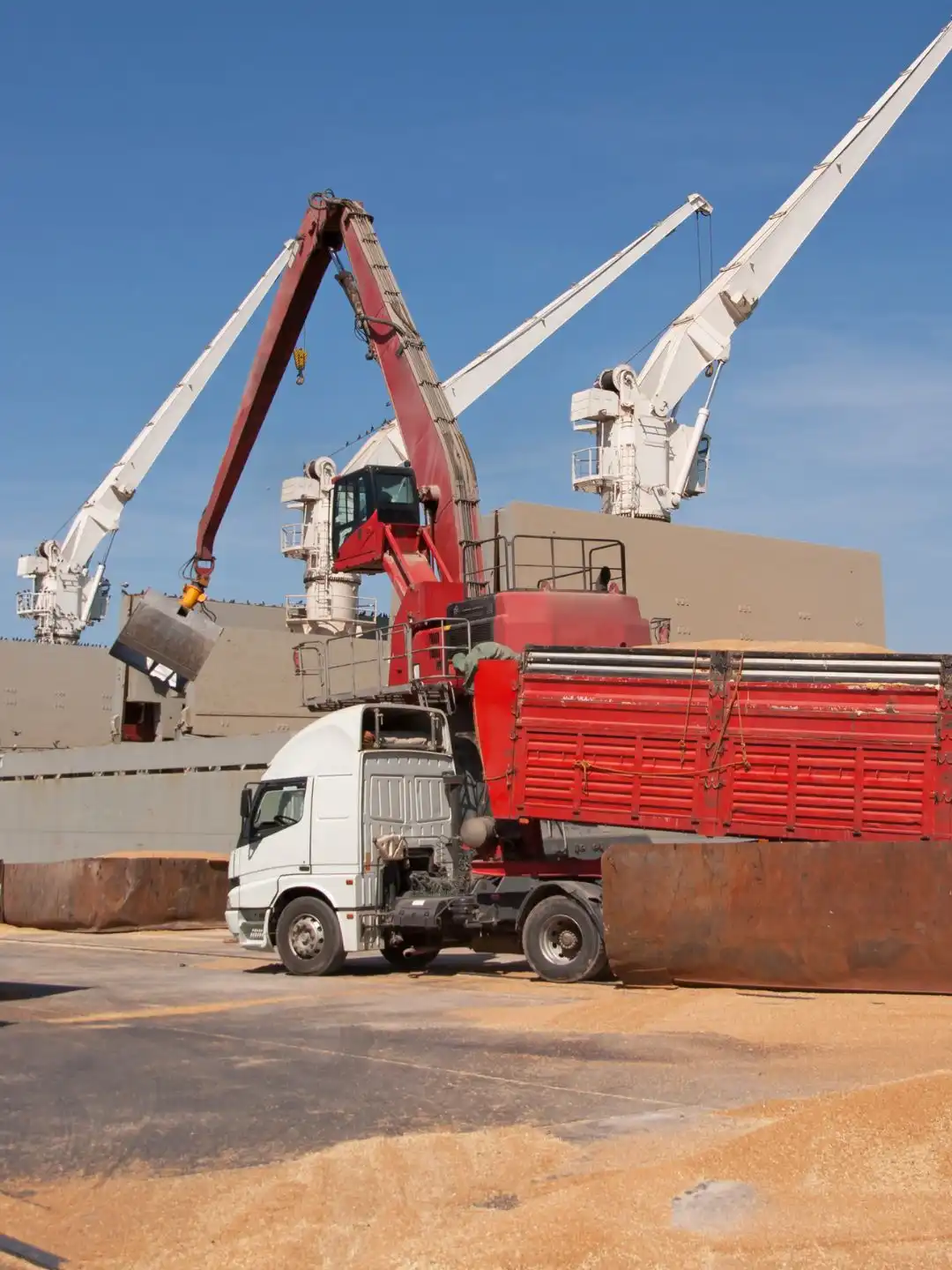
The route is around 11,500 nautical miles one way. A loaded leg plus the empty return is close to 23,000 nautical miles. We estimate 8 days at each port and roughly 75 days at sea per round trip. That puts one round voyage at about 90 days, so six round trips fit across two grain seasons. Total freight for the six voyages is approximately USD 15 million on 390,000 mt of soybeans.
The cargo owner chose this Panamax because its hold shape suits the way the receiving terminal stows grain. Last season’s lifts on the same ship also gave it a clean performance record. A COA would have let the owner swap ships. The cargo owner wanted to be sure of the ship.
Demurrage is USD 24,000 per day for each voyage. That figure reflects expected Panamax TCE over the contract period. The laytime clock runs separately for each voyage. The owner carries all the risk and bunker cost of the empty leg from China back to Brazil, and the per-tonne rate covers it. The off-hire wording follows the BIMCO CONSEC default. An off-hire event excuses the affected voyage, and the owner may extend the contract by one voyage.
Common mistakes and misuse
- Pricing it like a single voyage charter. A single-voyage USD per tonne rate copied across ignores the ballast leg, which the owner now pays for on every round trip. The rate must cover ballast bunker over the whole chain.
- Leaving out the off-hire clause. Without clear CONSEC off-hire wording, one breakdown can start a dispute over the whole contract. The argument is whether the lost voyage falls on the owner, the charterer, or both.
- Fixing a ship that is due for drydock during the contract. The named ship may be due for special survey or drydocking in the contract period. The contract must then say clearly how the missed voyages are handled. Otherwise the parties end up arguing whether the contract is suspended or broken.
- Mixing up consecutive voyages and a contract of affreightment. A COA is the right choice when any suitable ship will do. CONSEC limits the owner to one ship and prices that in.
- Forgetting that each voyage is settled on its own. Demurrage, despatch and freight are worked out per voyage. Adding laytime up across voyages is unusual and needs its own clear wording.
- Setting laycans too tight across the chain. The ship’s real schedule will drift. Tight back-to-back laycans force the owner into rushed turnarounds. Realistic gaps between laycans are part of good contract design.
When a consecutive voyages charter is the right choice
A consecutive voyages charter is the right contract when one ship clearly fits the trade. That fit can come from stowage, gear, performance record or hold shape. Your cargo programme must also keep that ship busy full time for several months. It suits seasonal trades such as grain export windows. The cargo owner is sure of a ship during a tight harvest, and the owner is sure of work over the same period. A contract of affreightment is usually cheaper and more flexible when the choice of ship does not matter. A time charter is the better fit for charterers who want to run the voyage themselves.
Our ship-brokering team can compare CONSEC, COA and time charter for your cargo programme. We model all three against your cargo calendar and the ships available, and show which one costs least over the contract. To charter a bulk carrier on a consecutive voyages programme, get a quote. Send us the route, the cargo calendar and the ship specification you have in mind.
Scope and what this page does not cover
This page explains how a consecutive voyages charter works and how the BIMCO CONSEC form frames it. It does not draft off-hire or force majeure clauses for any legal system. It does not cover the tax treatment of ballast-leg costs or forecast freight rates over the contract. Take those questions to a chartering lawyer or a market analyst, working from current BIMCO guidance and INTERCARGO commentary.